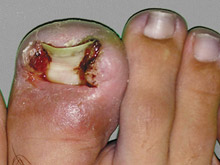
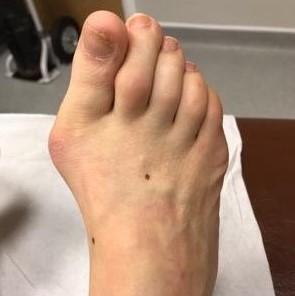
Have you noticed a bony lump forming at the base of your big toe or pain along the outer edge of your foot?
You are likely dealing with one of the following types of bunions. Affecting roughly one in four UK adults, bunions are progressive structural deformities that rarely improve on their own.
However, not all bunions are identical. Identifying the exact type of bunion you have, along with its underlying biomechanical cause, is essential for choosing the most effective treatment. Whether you are exploring conservative podiatry care or considering minimally invasive surgery at a specialist UK foot hospital, understanding your specific diagnosis is the first step towards pain-free walking.
What Is a Bunion?
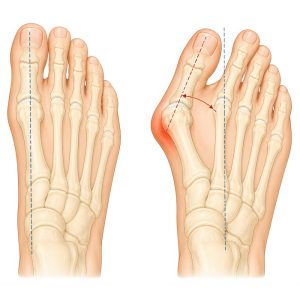
In medical terms, a classic bunion is known as hallux valgus. Rather than being a simple growth of extra bone, a bunion occurs when the first metatarsal bone drifts outward towards the inside edge of your foot, pushing the big toe inward towards the second toe. Over time, this three-dimensional shift causes the joint to protrude, leading to friction against footwear, inflammation, swelling, and joint stiffness.
The 5 Main Types of Bunions
Foot and ankle specialists categorise bunions based on their location, age of onset, and underlying structural triggers.
1. Classic Structural Bunion (Hallux Valgus)
This is the most common presentation seen in clinical practice. It develops gradually at the base of the big toe (the first metatarsophalangeal joint) and is graded as mild, moderate, or severe depending on the angle of the bone drift measured on weight-bearing X-rays.
- Common triggers: Inherited foot mechanics (such as flat feet or hypermobile joints), compounded by narrow or high-heeled footwear.
2. Tailor’s Bunion (Bunionette)
A tailor’s bunion forms on the opposite side of the foot at the base of your little toe. It earned its name historically from tailors who sat cross-legged all day, placing constant pressure on the outer borders of their feet.
- Common triggers: A naturally prominent outer bone (fifth metatarsal), narrow or pointed shoes, or the way your weight shifts onto the outside edge of your foot when you walk.
3. Juvenile or Adolescent Bunion
Unlike adult bunions, juvenile bunions appear in children and teenagers, typically between the ages of 10 and 15. They are strongly linked to genetics and ligamentous laxity rather than footwear choices.
- Common triggers: Family history of bunions, inherited flat feet, and flexible joints during growth spurts.
4. Arthritic Bunion
When osteoarthritis, rheumatoid arthritis, or gout damages the cartilage inside the big toe joint, the joint becomes unstable and deformed. Unlike a standard structural bunion, an arthritic bunion is often accompanied by deep internal joint aching and a severely restricted range of motion (sometimes overlapping with hallux rigidus or “stiff big toe”).
- Common triggers: Wear and tear, inflammatory autoimmune conditions, or previous joint trauma.
5. Overlapping or Severe Deformity Bunion
In advanced stages, the big toe drifts so far inward that it crosses over or under the second toe. This places immense pressure on the lesser toes, frequently causing secondary hammertoes, painful corns, and ball-of-foot pain (metatarsalgia).
- Common triggers: Untreated progressive hallux valgus combined with weakened ligaments around the toe joints.
Treatment Options by Bunion Type
| Bunion Type | Non-Surgical Management | Surgical Solutions |
| Classic Bunion (Mild to Moderate) | Wide-fitting footwear, bespoke orthotics, and targeted physiotherapy. | Minimally Invasive Keyhole Osteotomy (e.g., Scarf/Akin or MICA) to realign the bone with minimal scarring. |
| Tailor’s Bunion (Bunionette) | Shoes with a deep, wide forefoot, protective gel padding, and custom insoles to redistribute outer-foot pressure. | Fifth Metatarsal Osteotomy, where the bone is subtly repositioned and secured to narrow the forefoot. |
| Juvenile Bunion | Regular monitoring, supportive orthotics, and night splints during growth years. Surgery is usually delayed until bone growth is complete. | Realignment Osteotomy once skeletal maturity is reached, correcting underlying structural angles to prevent recurrence. |
| Arthritic Bunion | Stiff-soled rocker footwear, anti-inflammatory medication, and ultrasound-guided corticosteroid injections. | Arthrodesis (Joint Fusion) or Joint Replacement, eliminating painful bone-on-bone friction permanently. |
| Overlapping / Severe Bunion | Custom-moulded footwear and toe separators to prevent skin breakdown, though conservative relief is often limited. | Lapidus Procedure (stabilising the midfoot foundation) or Complex Forefoot Reconstruction to straighten both the big and second toes. |
Frequently Asked Questions About Bunion Care in the UK
Can bunion splints or exercises cure a bunion?
No. While toe spacers, night splints, and foot-strengthening exercises can ease muscle tension and reduce rubbing inside your shoes, they cannot reverse bone alignment. Once a bunion has formed, surgical correction is the only way to straighten the toe permanently.
When should I consider bunion surgery?
Foot and ankle surgeons generally recommend surgery when bunion pain interferes with your daily walking, exercise, or work, or when the deformity begins pushing your other toes out of alignment, not solely for cosmetic reasons.
What are the benefits of visiting a private foot hospital in the UK?
While NHS podiatry and orthopaedic services provide high clinical standards, routine bunion surgery waiting lists frequently exceed 12 to 24 months. Choosing a specialist private foot hospital offers immediate access to weight-bearing imaging, consultant-led treatment plans, and modern minimally invasive keyhole techniques that promote faster recovery and reduced postoperative swelling.
Book a Specialist Bunion Assessment
If foot pain is limiting your mobility or making everyday footwear unbearable, an accurate diagnosis is essential. Contact our specialist podiatry and foot surgery team today to arrange a comprehensive consultation, gait analysis, and weight-bearing X-ray assessment tailored to your feet.